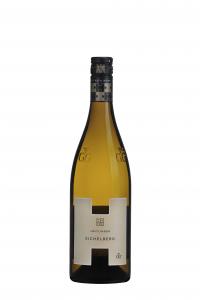
Heitlinger 2018 Eichelberg Pinot Blanc VDP.GROSSES GEWÄCHS
Weingut Heitlinger is at home in the idyllic landscape between Karlsruhe, Heidelberg, and Heilbronn known as the Kraichgau. This ambitious ambassador of Kraichgau wine culture lend the Baden region a special note. The pursuit of quality, sustainability, and a responsible approach to nature is the hallmark of the estate. With a combined vineyard area of more than 110 ha (272 acres), they number among Germany’s largest organic wine producers. Heitlinger is member of the VDP (Association of German Prädikat Wine Estates), an organization comprising some of the country’s finest wine producers. The soils consist of loess and colored marl. The latter is typical in the Kraichgau, but with the exception of a few patches in France (in the Jura, Burgundy, and the Rhone Valley), colored marl is seldom found elsewhere in the world. This type of soil lends the wines a special, fruity-mineral character that is particularly prevalent in the premium wines from the so-called Grosse Lagen (vineyards classified by the VDP as the very finest of a respective region). Heitlinger cultivates vines in the Grosse Lage sites Spiegelberg, Heinberg, Eichelberg, Königsbecher, Schellenbrunnen, and Hassapfel. Members of the Pinot family, “Burgunder” in German, account for 70 percent of all plantings, including Pinot Gris, Pinot Blanc, Pinot Noir, Chardonnay, and Auxerrois. Germany’s first Auxerrois wine from a Grosse Lage – the Hassapfel site – was produced in 2012.
Heitlinger believes that biologically active soils are a prerequisite for healthy, stable vines. Winemaker Claus Burmeister’s team uses no artificial, chemically synthesized substances and improves soil fertility by fostering biodiversity with green cover that provides a habitat for a wealth of flora, fauna, and microorganisms.Regardless of quaity category, be it a regional Gutswein or a premium wine from a Grosse Lage, all grapes are individually processed and vinified in order to bring forth each parcel’s distinctive characteristics. The entire crop is harvested exclusively by hand, during several rounds through the vineyards, to ensure that only ripe and undamaged grapes are processed. Upon arrival at the estate, the grapes are painstakingly sorted again. To increase the intensity of aromas and flavors in the finished wine, the grape juice is cooled down and kept in contact with the skins for up to six days to extract as many aroma and flavor compounds as possible prior to fermentation. This brings forth a wine’s site-specific individuality and enhances its longevity. Cellar procedures are extremely gentle thanks to the help of pneumatic presses and the use of natural gravity rather than pumps. The Pinots Grosse Gewächse (dry wines from Grosse Lage sites) are matured exclusively in large and small oak casks (barriques).
“Hilsbacher Eichelberg” is the oldest documented site in the Kraichgau (1238). It is a south-facing vineyard with a slope of more than 50 percent. It lies at an altitude of up to 320 meters/1,050 feet in the midst of a forest. The iron-poor soils consist of barren lime marl with some Stubensandstein, an ancient sandstone. The grapes are gently harvested by hand, carefully sorted, and after several days of skin contact, slowly pressed. Fermentation takes place in wooden casks for ca. eight months. Pale golden yellow; a very fine nose that is reminiscent of light-colored, fresh fruit; somewhat tropical, with an herbal spiciness and mineral notes. On the palate the wine shows a beautiful opulence and a subtle tannic structure. Freshness and length. The acidity is well integrated. Aromas of pineapple, grapefruit, and papaya. Good aging potential. Food affinities: highly seasoned, aromatic dishes; grilled fish; veal; poultry; and powerful cheese (époisses, munster).
Product attributes
Supplier


Company
Website
 Germany
Country
Product details
Place of processing
Germany
Origin of main ingredient
Origin of main ingredient
Packaging formats
Packaging
Composition

 Download
